Periodontal Treatment for Chronic Gingivitis and Periodontitis
Gum disease rarely announces itself with drama. Most people notice a little bleeding when brushing, perhaps a trace of bad breath, maybe a sense that the gums look puffy around the front teeth. It is easy to ignore, especially when there is no pain. Yet that quiet phase is exactly why chronic gingivitis and periodontitis deserve serious attention. By the time teeth feel loose or chewing becomes uncomfortable, the supporting tissues have often been under attack for years.
Periodontal treatment is the structured effort to stop that process, control infection, and preserve the bone and ligament that keep teeth stable. The goals sound simple, but the path is not always straightforward. Every mouth behaves a little differently. Some patients accumulate thick deposits quickly despite trying hard at home. Others have only modest plaque levels yet show surprisingly rapid breakdown because of smoking, diabetes, dry mouth, genetics, or a long gap in professional care. Good treatment accounts for all of that. It is never just a cleaning. It is diagnosis, risk assessment, mechanical therapy, behavioral change, and maintenance over time.
The difference between chronic gingivitis and periodontitis
Gingivitis is inflammation limited to the gums. The classic signs are redness, swelling, tenderness, and bleeding during brushing or flossing. In this stage, the supporting bone has not been permanently lost. That matters because gingivitis is usually reversible with effective plaque removal, a professional cleaning, and consistent home care.
Periodontitis begins when inflammation extends deeper. The attachment between the tooth and surrounding tissues starts to break down. Pockets form, bone is lost, and bacteria can colonize areas that a toothbrush cannot reach. Once support is lost, the body does not simply grow it all back on its own. Treatment can stop progression and, in selected cases, recover some lost support through regenerative procedures, but prevention is far easier than rebuilding.
Patients often ask what changed between the two. The short answer is time, biology, and access. Plaque is the starting point, but plaque that sits undisturbed hardens into calculus. The rough surface of calculus traps more bacteria. The immune response stays activated. Over months and years, the damage shifts from superficial inflammation to structural destruction.
Why chronic disease is so often missed
One of the most misleading aspects of periodontal disease is that chronic cases may not hurt much. A patient can have deep periodontal pockets and significant bone loss with very little day-to-day discomfort. I have seen people come in because of a chipped filling, only to discover that several molars had advanced periodontal involvement that had gone unnoticed.
There is also a common misconception that bleeding means brushing too hard. In practice, spontaneous bleeding or bleeding during routine cleaning is more often a sign of inflamed tissue. Healthy gums do not usually bleed from gentle flossing. Another blind spot is breath odor. Patients often blame coffee, a dry mouth, or an empty stomach, and those can play a part, but persistent bad breath is frequently linked to bacterial buildup below the gumline.
The warning signs are worth recognizing early:
- Bleeding during brushing or flossing
- Swollen, shiny, or tender gums
- Persistent bad breath or a bad taste
- Receding gums or teeth that look longer
- Teeth that feel loose or bite differently
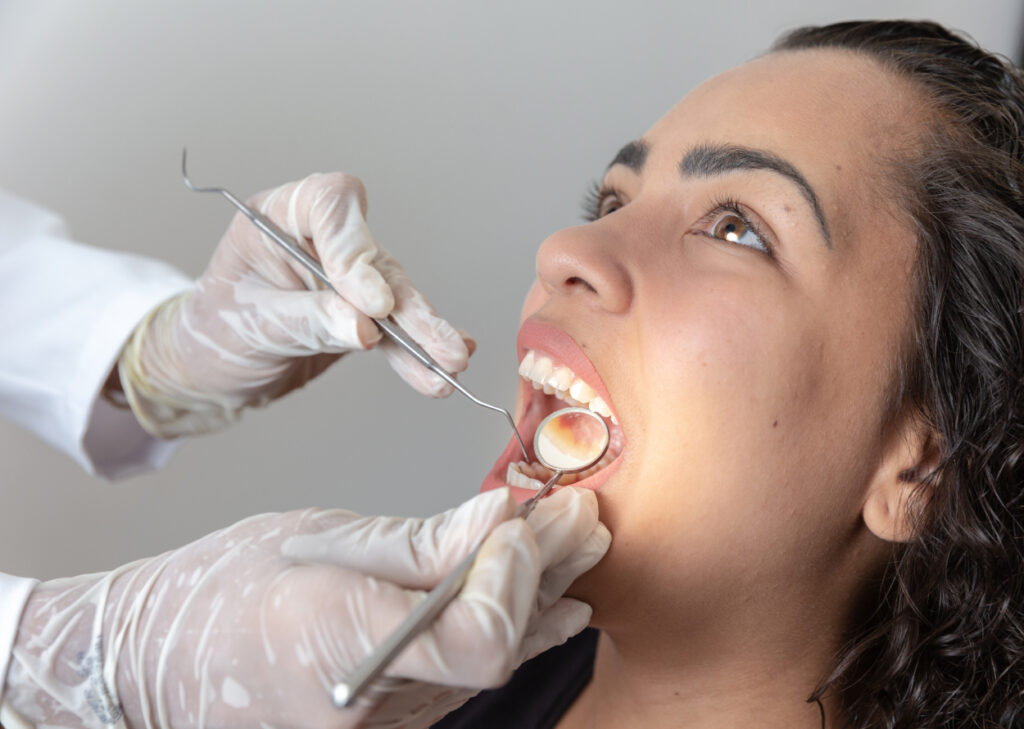
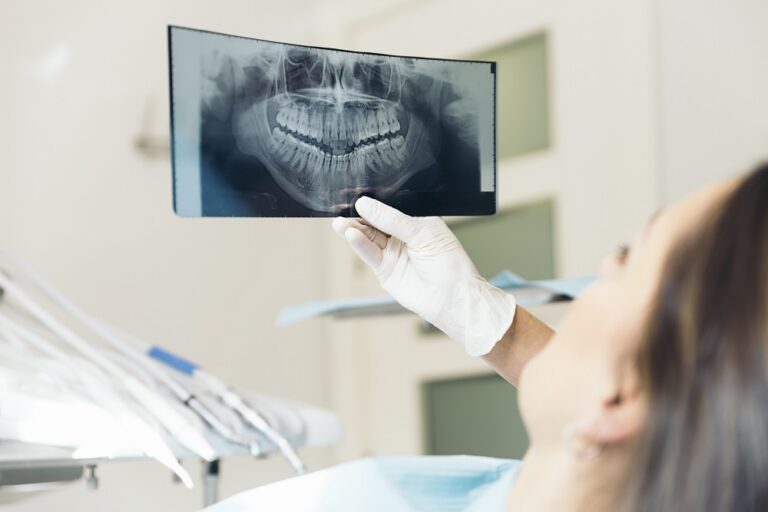
Even with these signs, diagnosis should never be based on appearance alone. Proper periodontal evaluation requires probing measurements around each tooth, assessment of bleeding, mobility, gum recession, plaque and calculus levels, and dental radiographs to check the bone.
What a proper periodontal evaluation looks like
A thorough evaluation is more detailed than many patients expect. The clinician measures the depth of the gum pocket around each tooth, usually at six points per tooth. Numbers matter. A shallow sulcus in a healthy mouth is generally around 1 to 3 millimeters. When readings become deeper, especially when accompanied by bleeding and radiographic bone loss, the concern shifts toward periodontitis.
The pattern of disease matters too. Is the inflammation generalized or limited to the lower front teeth where calculus often builds quickly? Are the deepest pockets around old crowns that trap plaque? Is there furcation involvement, where bone loss affects the area between the roots of molars? Are certain teeth mobile because of bone loss, heavy bite forces, or both? Good periodontal treatment depends on these distinctions.
Medical history carries real weight here. Diabetes that is poorly controlled tends to worsen periodontal inflammation and impairs healing. Smoking is one of the strongest risk factors for progression and treatment resistance. Certain medications can contribute to dry mouth or gum overgrowth. Pregnancy, immune disorders, and stress can alter the tissue response as well. This is one area where a rushed exam usually leads to mediocre results.
The first phase of periodontal treatment
The foundation of periodontal treatment is reducing the bacterial load above and below the gums. For chronic gingivitis, this may be achieved with professional prophylaxis, removal of calculus and plaque, and targeted oral hygiene instruction. When periodontitis is present, the first active phase usually involves scaling and root planing.
Scaling removes plaque, calculus, and bacterial toxins from the tooth surface and below the gumline. Root planing smooths the root surface to make it less hospitable to bacterial reattachment and easier for the tissue to heal against. Depending on the extent of disease, this may be completed over one or more visits, often with local anesthesia so the clinician can work thoroughly in deep or sensitive areas.
Patients sometimes ask if scaling and root planing is just a “deep cleaning.” That phrase is common in everyday conversation, but it can minimize what is actually happening. This is not a cosmetic polish. It is non-surgical periodontal therapy intended to disrupt a chronic infectious process and give the tissues a chance to recover. In moderate cases, this alone can produce a substantial reduction in bleeding and pocket depth. In advanced cases, it is still essential, but it may not be sufficient on its own.
A realistic expectation helps. Inflamed gums can tighten noticeably after treatment, which is a good sign, but it can also reveal recession that was previously hidden by swelling. Patients are sometimes surprised when the teeth look slightly longer afterward. That change is not treatment causing damage. It is inflammation resolving and exposing the true contours of the gumline.
What happens after scaling and root planing
The re-evaluation visit is where judgment becomes important. Usually several weeks after initial therapy, the tissues are examined again. The key questions are straightforward. Has bleeding reduced? Have pockets become shallower? Is the patient able to keep the areas clean at home? Are there residual sites that remain inflamed or deep despite good effort?
This stage often separates cases that can be managed with maintenance from those that need specialist involvement or surgical therapy. A mouth that began with generalized bleeding and 4 to 5 millimeter pockets may respond beautifully once plaque control improves and calculus is removed. A different patient with isolated 7 to 8 millimeter pockets around molars, furcation involvement, and persistent inflammation may need flap surgery or regenerative treatment to gain better access and improve long-term stability.
One practical point deserves emphasis. The success of initial periodontal treatment depends heavily on what happens between appointments. A technically excellent debridement will not hold if plaque reaccumulates rapidly and daily cleaning remains inconsistent.
Home care is part of treatment, not an optional add-on
Many patients hope there is a professional procedure that fixes gum disease while home care stays roughly the same. There usually is not. The bacteria involved in gingivitis and periodontitis are biofilm organisms. They re-form. If they are not disrupted regularly, inflammation returns.
The home care basics are not glamorous, but they are effective when done well:
- Brush thoroughly twice a day with a soft-bristled toothbrush or an electric brush
- Clean between the teeth daily with floss, interdental brushes, or picks matched to the space
- Use any prescribed antimicrobial rinse exactly as directed, not indefinitely without review
- Replace worn brushes and monitor hard-to-reach areas where plaque tends to return
- Keep maintenance visits on schedule, because home care alone cannot remove calculus
Technique matters more than force. Aggressive scrubbing does not compensate for poor angulation or rushed brushing. Interdental cleaning is often the turning point. I have seen patients who brushed faithfully for years yet continued to show bleeding between the lower incisors until they learned to use a small interdental brush properly. Within a month, the tissue looked different.
When antibiotics help, and when they do not
Antibiotics have a role in selected periodontal cases, but they are not a substitute for mechanical treatment. Biofilm protects bacteria in ways that reduce the effect of systemic medication. If plaque and calculus remain in place, antibiotics alone usually produce short-lived improvement at best.
That said, there are situations where adjunctive antimicrobials make sense. Some clinicians use locally delivered antibiotics in isolated persistent pockets. Systemic antibiotics may be considered in specific cases of aggressive progression, acute periodontal abscess, or when guided by the overall clinical picture. The choice should be deliberate. Overuse adds cost, risk of side effects, and antibiotic resistance without addressing the root problem.
Chlorhexidine rinses are another common topic. They can be very useful for short-term bacterial control after treatment or in patients with limited dexterity, but prolonged use may stain teeth and alter taste. Like many tools in dentistry, they work best when used with a clear purpose and a time limit.
Surgical periodontal treatment and when it becomes necessary
Not every case can be stabilized non-surgically. Deep pockets, complex root anatomy, vertical bone defects, and furcation involvement can leave bacterial reservoirs that are difficult or impossible to manage without surgery. In those situations, surgical periodontal treatment aims to improve access, reduce pocket depth, reshape or regenerate supporting tissues, and create an environment the patient https://maps.app.goo.gl/ChfJKu9PFXzaNGje8 can maintain.
Flap surgery is often used to lift the gum tissue, allow direct visualization of root surfaces and bone defects, remove residual deposits, and then reposition the tissue more favorably. In some cases, osseous recontouring is performed to create more maintainable architecture. In others, regenerative therapy is considered. That may involve bone grafts, barrier membranes, biologic materials, or combinations of these, particularly when the defect pattern offers a realistic chance of regaining support.
The word “surgery” understandably makes patients anxious. In reality, many periodontal surgeries are well tolerated with local anesthesia and thoughtful postoperative management. The harder part is often not the procedure itself, but the commitment afterward. Surgical results need maintenance, otherwise disease can recur around the same teeth.
Teeth that can be saved, and teeth that probably should not be
This is one of the most difficult judgment calls in periodontal care. Patients are often emotionally attached to a tooth, especially if it is visible or has been present without pain for years. Clinicians, meanwhile, have to weigh prognosis honestly. A tooth with advanced mobility, severe bone loss, recurrent abscess formation, and poor cleansability may consume time and money yet remain a weak link.
Saving teeth when possible is a sound goal, but “possible” is not the same as “predictable.” A compromised molar with deep furcation involvement in a heavy smoker may look salvageable on an X-ray, but if it cannot be kept clean and continues to flare up, extraction may be the more responsible recommendation. On the other hand, a front tooth with moderate bone loss but excellent patient compliance can remain stable for many years with consistent maintenance.
This is where experience matters. Good periodontal treatment is not only about performing procedures. It is about matching the treatment burden to the likely outcome and telling the patient the truth without oversimplifying.
The role of maintenance in long-term control
Once active therapy is complete, the disease is not “cured” in the casual sense many people expect. Periodontitis is better thought of as controlled or uncontrolled. A patient with a history of periodontitis remains susceptible and usually needs periodontal maintenance at intervals shorter than standard six-month cleaning schedules. Three to four months is common, though the exact interval depends on risk level, pocketing, home care, smoking status, diabetes control, and how quickly plaque and calculus return.
Maintenance visits are purposeful. They are not interchangeable with routine cleanings. The clinician reassesses inflammation, measures selected pocket depths or full charting as needed, removes deposits from problem sites, checks mobility and recession, reviews home care, and watches for relapse. Small changes caught early are much easier to manage than a quiet two-year slide back into active disease.
I have seen maintenance make the difference between stability and repeated retreatment. A patient who used to lose ground every year may hold steady for a decade once regular supportive care becomes routine. Another patient, equally well treated initially, may return only when something hurts and arrive with recurrent deep pockets that could have been prevented.
Special challenges in smokers, diabetics, and older adults
Smoking changes the periodontal picture in ways that are both subtle and severe. Smokers may bleed less than expected because of vascular changes, which can make the gums look deceptively calm while destruction continues underneath. Healing after treatment is typically less favorable. Quitting does not rewrite the past, but it improves the outlook meaningfully.
Diabetes and periodontal disease influence each other. Poor glycemic control increases inflammation and susceptibility to breakdown. Active periodontal infection can, in turn, make glucose management more difficult. When patients and physicians work together on both fronts, periodontal treatment tends to be more successful.
Older adults present another layer of complexity. Root exposure, dry mouth from medications, reduced dexterity, and existing bridgework or implants can make plaque control more demanding. Yet age alone is not a barrier to good outcomes. Many older patients do very well once tools are adapted to their needs, perhaps with electric brushing, larger-handled aids, or simpler routines that they can perform consistently.
Cost, time, and why delaying often costs more
Patients understandably want to know what periodontal treatment will involve in practical terms. The honest answer is that cost varies with severity, number of affected teeth, need for anesthesia, imaging, possible surgery, and maintenance frequency. Time varies too. Mild chronic gingivitis may improve quickly with cleaning and better home care. Established periodontitis often requires staged care over weeks or months.
Delay has a price. Early disease is less expensive and less invasive to treat. Once deeper pockets form and bone is lost, options become more complex. Add the possibility of extraction, implant placement, bridgework, or removable prosthetics, and the financial difference can become substantial. There is also a biological cost that money cannot fully repair. Natural periodontal support, once lost, is difficult to replicate.
What patients should expect during recovery
After non-surgical treatment, mild tenderness, temporary cold sensitivity, and slight gum soreness are common. Most people return to normal activity the same day. Good plaque control should continue gently but consistently. If local anesthesia was used, eating should wait until numbness resolves to avoid accidental biting.
Surgical recovery depends on the procedure. Swelling and tenderness are usually manageable with routine postoperative instructions and prescribed or recommended medications. Soft foods help for a few days. Meticulous but guided cleaning is important. The temptation to “leave it alone” for too long can backfire if plaque is allowed to accumulate around healing tissues.
The best recoveries tend to come from patients who know what to expect, ask questions early, and understand that the goal is not merely to feel better for a week but to create stable conditions for years.
A realistic picture of success
Successful periodontal treatment does not always mean every pocket disappears or every recession defect is corrected. It often means inflammation is controlled, bleeding is minimal, pocket depths are reduced to manageable levels, the patient can maintain the mouth effectively, and tooth loss risk is lowered. In advanced cases, success may mean keeping strategic teeth comfortable and functional for many more years rather than indefinitely.
That may sound modest, but it is not. Stabilizing a chronic destructive disease is a meaningful clinical win. It preserves chewing function, appearance, comfort, and treatment options down the line. More importantly, it gives patients back a sense of control. They understand what is happening, what can be changed, and what habits will protect the results.
Periodontal treatment works best when it is approached as a partnership. The clinician brings diagnosis, instrumentation, and judgment. The patient brings consistency, follow-through, and the willingness to return before small problems become large ones. When those two sides line up, even mouths with significant chronic gingivitis or periodontitis can often be brought back to a healthier, more stable state.
Avra Dental
Address: 1708 S Victoria Ave B, Ventura, CA 93003
Phone number: (805) 941-1001
FAQ About Periodontal Treatment
Can a dentist get rid of periodontal disease?
A dentist or gum specialist (periodontist) cannot fully cure or reverse advanced periodontal disease (periodontitis), but they can successfully stop its progression and manage the infection.
Is periodontitis very serious?
Yes, periodontitis is a very serious, advanced form of gum disease that destroys the bone and tissues supporting your teeth.
How is stage 2 periodontal disease treated?
Stage 2 periodontal disease (early to moderate periodontitis) is primarily treated with non-surgical deep cleaning procedures like scaling and root planing to remove bacteria and tartar below the gumline.
Ends · TROYYXEP424